



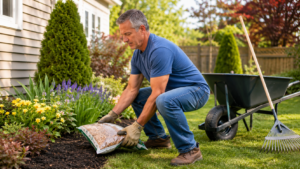
Yard work is great for your home, but it can be brutal on your body if you jump into it too fast. Raking, lifting, bending, digging, mowing, and gardening can all put stress on your back, shoulders, knees, wrists, and neck.
Most yard work injuries do not happen because the task is too hard. They happen because people do too much, too fast, with poor body mechanics.
The good news is that a few simple changes can help you stay active, protect your body, and avoid turning a productive weekend into a painful Monday.
Why Yard Work Causes Injuries
Yard work often combines awkward positions, repetitive movements, heavy lifting, and long periods of bending. That is the perfect recipe for pain.
Common yard work injuries include:
- Low back pain from bending, lifting, or twisting
- Shoulder pain from pruning, raking, or overhead work
- Knee pain from kneeling, squatting, or carrying heavy loads
- Neck pain from looking down while gardening
- Wrist and elbow pain from gripping tools or repetitive pulling
- Muscle strains from doing too much without warming up
Your body can handle yard work, but it needs good positioning, rest breaks, and smart pacing.
Warm Up Before You Start
Yard work is exercise. Treat it that way.
Before you start, take 5 to 10 minutes to get your body moving. A quick warm-up helps improve blood flow, loosen your joints, and prepare your muscles.
Try this simple warm-up:
- Walk around the yard for 3 to 5 minutes
- Do 10 gentle bodyweight squats
- Roll your shoulders backward 10 times
- Gently rotate your trunk side to side
- Stretch your calves, hamstrings, and hips
Do not go straight from sitting at breakfast to hauling mulch. That is how backs get angry.
Use Good Lifting Mechanics
A lot of yard work injuries happen when lifting bags of mulch, soil, stones, branches, or heavy equipment.
Use these lifting tips:
- Keep the object close to your body
- Bend at your hips and knees, not just your back
- Avoid twisting while holding something heavy
- Turn your whole body with your feet
- Break heavy loads into smaller trips
- Ask for help with awkward items
- Use a wheelbarrow or cart when possible
- The goal is not to prove you can carry everything in one trip. Nobody gives out trophies for throwing your back out.
- Avoid Repetitive Bending
Gardening and weeding often force you into a bent-over position for long periods. This can irritate your lower back, hips, and hamstrings.
Better options include:
- Use a garden stool or kneeling pad
- Switch between kneeling, sitting, and standing
- Bring the work closer to you when possible
- Use long-handled tools
- Take standing breaks every 15 to 20 minutes
- Stretch your back and hips between tasks
- If you stay bent over for an hour, your back is going to complain. Listen before it starts yelling.
- Switch Sides Often
- Raking, shoveling, sweeping, and trimming are repetitive activities. Most people use their dominant side the entire time, which overloads one side of the body.
To reduce strain:
- Switch hands while raking or sweeping
- Alternate which foot steps forward while shoveling
- Change positions every few minutes
- Avoid reaching too far away from your body
- Take short breaks before fatigue sets in
- Repetition is not the enemy. Repetition with bad form and no breaks is the problem.
Protect Your Shoulders
Overhead trimming, pruning, and reaching can irritate the shoulders, especially if you already have stiffness or weakness.
To protect your shoulders:
- Keep your work below shoulder height when possible
- Use a ladder or step stool instead of reaching too high
- Avoid holding tools overhead for long periods
- Take breaks during pruning or trimming
- Keep your elbows closer to your body when possible
- Use lightweight tools
- If your shoulder starts aching, burning, or feeling weak, stop and change the task. Pushing through shoulder pain usually does not end well.
Use the Right Tools
- Good tools reduce stress on your body.
- Helpful options include:
- Long-handled weeders
- Lightweight rakes and shovels
- Ergonomic grips
- Wheelbarrows or garden carts
- Kneeling pads
- Gloves with grip support
- Electric or battery-powered tools when appropriate
- If a tool forces you into a bad position, it is not helping you. It is just making the job harder.
Pace Yourself
This is where most people mess up.
They try to finish the entire yard in one day, then wonder why they can barely move the next morning.
A better plan:
- Break yard work into smaller blocks
- Work for 30 to 45 minutes, then take a short break
- Rotate between heavy and light tasks
- Do not save all the heavy lifting for the end
- Drink water throughout the day
- Stop before your body is exhausted
- Fatigue causes sloppy movement. Sloppy movement causes injuries.
- Watch for Warning Signs
- Some soreness after yard work can be normal. Sharp pain is not.
Pay attention to:
- Pain that gets worse as you continue
- Pain that travels down the leg or arm
- Numbness or tingling
- Weakness
- Swelling
- Pain that lasts more than a few days
- Pain that limits walking, reaching, bending, or sleeping
These are signs that your body needs help, not another weekend of “seeing if it goes away.”
How Physical Therapy Can Help
Physical therapy can help you recover from yard work injuries and prevent them from coming back.
At Somersworth Physical Therapy, we help patients improve mobility, strength, balance, posture, and lifting mechanics so they can stay active without constantly dealing with pain.
Physical therapy can help with:
- Low back pain
- Sciatica symptoms
- Shoulder pain
- Neck pain
- Knee pain
- Hip pain
- Elbow and wrist pain
- Muscle strains
- Balance issues
- Weakness or stiffness
We also teach you how to move better during real-life activities like lifting, gardening, raking, mowing, and carrying.
The goal is not just to calm down the pain. The goal is to help you move with confidence again.
When Should You See a Physical Therapist?
- You should consider physical therapy if pain lasts more than a few days, keeps coming back, or limits your ability to do normal activities.
- You do not need to wait until the pain is severe. In most cases, the earlier you address the issue, the easier it is to fix.
You should schedule an appointment if:
- Your back hurts after yard work
- Your shoulder hurts with reaching or lifting
- Your knee pain makes kneeling or stairs difficult
- You feel stiff every time you garden
- You have pain that keeps returning
- You want to prevent injuries before they start
At Somersworth Physical Therapy, no referral is needed to get started.
Final Tips for Safer Yard Work
- Warm up before starting
- Use your legs when lifting
- Avoid twisting with heavy objects
- Switch sides often
- Take breaks before you feel exhausted
- Use tools that reduce strain
- Keep heavy items close to your body
- Avoid long periods of bending
- Stop if pain changes or gets worse
- Yard work should leave your yard looking better, not your body feeling worse.
- If pain is keeping you from doing the things you enjoy, physical therapy can help you get back to moving better, feeling stronger, and staying active.
Somersworth Physical Therapy is here to help you stay healthy through yard work season and beyond.